Balancing life in a new state, raising a toddler, and carving out “us time” isn’t easy—but it’s always worth it. Luckily, we have an amazing daycare provider who has our backs, allowing us to sneak out for the occasional adventure.
Today was one of those days. We even caught some rare PNW sunshine! It wasn’t the 4:00 AM wake-up call of tours past, but it was just as fun. In fact, there was almost no “Type 2” fun—at least, that was the plan.
I’ve gotta be honest, though: this tour wasn’t all sunshine and rainbows. We walked away with a heavy lesson from a mistake that was 100% preventable. It all started with me not trusting my gut.
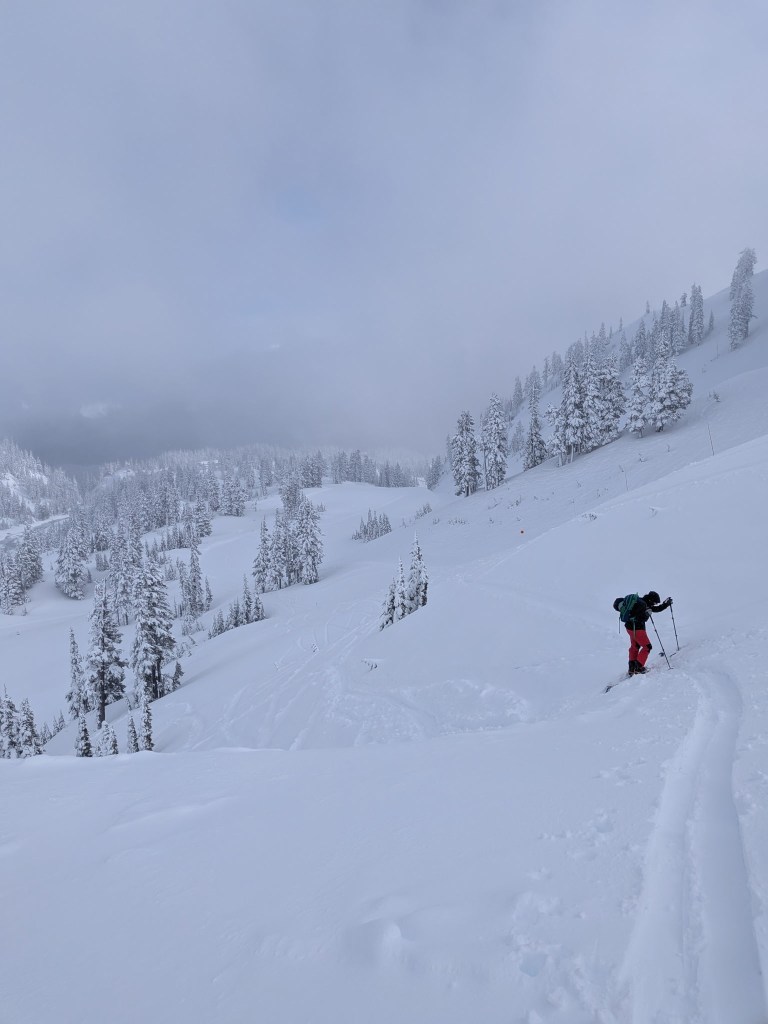
While skinning up, I noticed a familiar area and was shocked by the lack of tracks. I actually said to my husband, “Wow, that’s crazy, no one has even skied that.” Just a few days prior, following a foot of fresh powder, there had been dozens of lines. That should have been my first clue.
On top of that, I noticed rollerballs (or “pinwheels”) tumbling down the slopes. As I mentioned out loud, these are a major warning sign that the snow is rapidly warming and losing its strength. But as we kept moving, those thoughts just… dissipated.
We headed toward
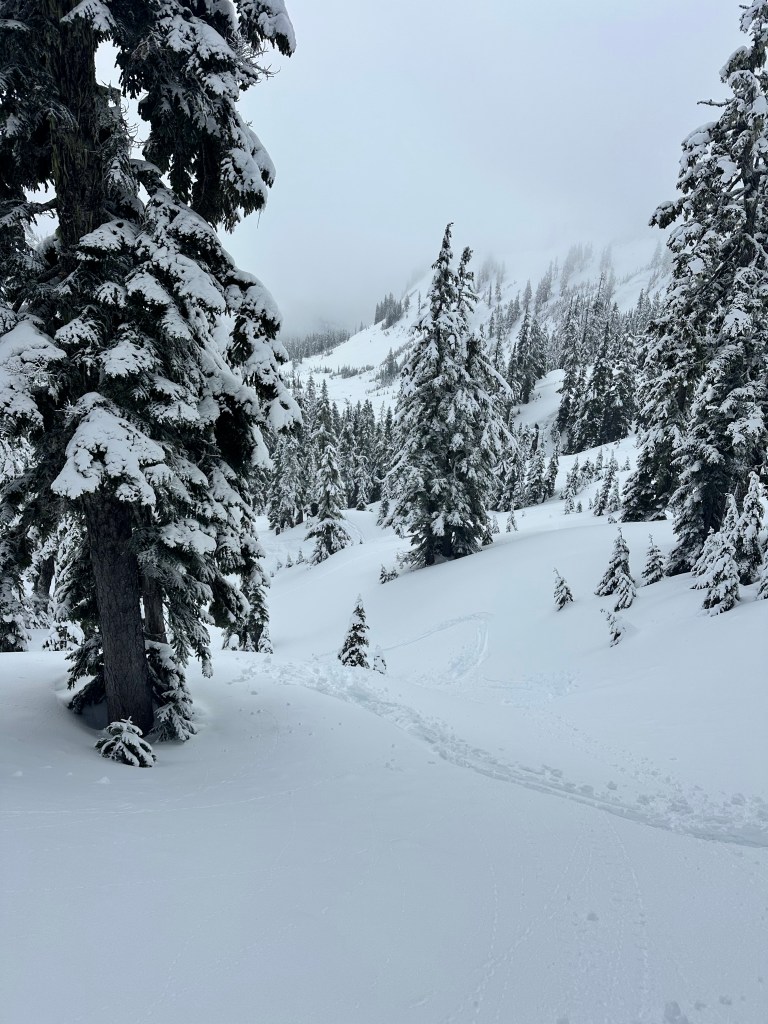
Swift Creek, an area we hadn’t explored yet. It’s generally a lower-risk zone with mellow, tree-covered slopes. The snow was perfect, and we had a blast navigating a new gully. After a 500-foot climb back out, we discussed our next move and settled on Bagley Lakes—the very area I had flagged earlier as being “peculiarly quiet.”
When we reached the edge, we saw others getting ready to descend the ridge, which gave us a false sense of security. We did our radio checks, and my partner crested the ridge for a ski cut.
He radioed immediately: he’d triggered a small avalanche, about 10 feet wide and 6 inches deep.
That feeling stopped me in my tracks. Even though I hadn’t started my descent, my mind raced. What do we do now? What should we have done instead? We opted to ride down the avalanche runout—the safest path remaining—and tip-toed across the slope, as if being light on our edges would make a difference at that point.
Once we reached the bottom, the day was over. On the trek back to the car, we dissected everything: the missed observations, the ignored gut feelings, and the “human factors” that led us there.
The scariest part? As we reached the bottom, we watched two guys follow our line. Neither had avalanche gear; one wasn’t even wearing a helmet. They didn’t stay together, and we watched in horror, realizing we had just experienced one of the most sobering moments of our lives.
The mountains always have something to teach us—the trick is being humble enough to listen the first time.
Lessons Learned:
- Trust the “Quiet”: If a popular zone like Bagley Lakes has almost zero tracks after a storm, there’s usually a reason.
- The Out Loud Rule: If you find yourself pointing out a red flag, (like rollerballs) to your partner don’t just “note it”, act on it. If it’s worth saying out loud, it’s worth changing the plan.
- Beware of Social Proof: Seeing others on the ridge going down something sketchier, isn’t a good enough reason to do it yourself. Don’t let someone else’s risk tolerance dictate your own.
- The Best Outcome: We are incredibly lucky that our “lesson” ended with a 6-inch slide and a conversation at the car, rather than a call to Search and Rescue.
 Unpaved Memories
Leave a comment